
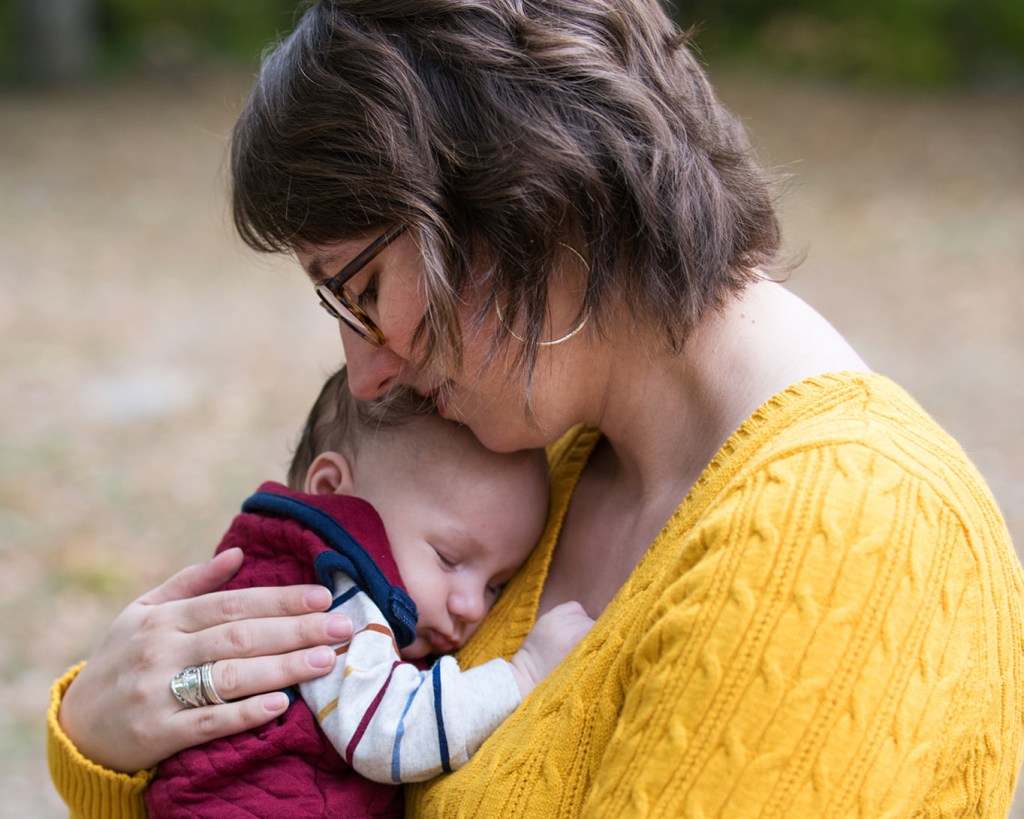
I lifted you out of the baby car seat and held you on my lap in the padded wooden church pew. You were two months old—small enough to lay on your back with your head at my knees and your little feet resting on my stomach. You loved to stare up at the lights on the ceiling while the congregation filed in around us. It was the fall of 2020. We sat in every other pew and greeted each other through masks.
You looked up at my masked face and smiled. The innocent delight in your toothless grin extended to your arms and legs. You wiggled and kicked and pressed your round little heels into my soft abdomen. I felt the warm glow of love and happiness fill my chest the way it always did when you smiled at me. I smiled back at you, behind my mask, and hoped you could see it in my eyes.
Occasionally strangers wondered aloud to me about what you must think of all the masks. After all, we barely knew what to think of them. They were supposed to slow the spread of COVID-19, but they were also uncomfortable, inconvenient, and an eyesore. I told people you didn’t think anything of the masks because you’d never known anything different. To you, they were as commonplace as raincoats and cat whiskers and shadows on a sunny day. They were just one of the many things to learn about in the big, new world outside the womb.
I was glad the masks didn’t bother you, but I hated that you thought they were normal. I hated that I thought they were normal, because I knew what you didn’t—that it wasn’t supposed to be like this.
*
I found out I was pregnant with you before there was any mention of the word pandemic. I looked forward to showing off my growing belly to friends and coworkers, shopping for onesies and bibs and crib sheets, and celebrating every milestone with your father and grandparents. That all changed with the arrival of a new, contagious, and potentially dangerous virus. The world I knew suddenly didn’t exist anymore.
Instead of going to work in cute maternity clothes, I stayed home in oversized T-shirts and sweatpants. I put a bottle of hand sanitizer in my car, did most of my shopping online instead of in person, and had virtual “lunches” with friends instead of meeting at restaurants. Sometimes it was hard to know what to do. I had to learn how to exist in a new and unfamiliar world.
When my doctor’s office stopped allowing visitors at appointments, I went to my 20-week ultrasound alone. I saw the four chambers of your healthy, beating heart and held my phone as close to the monitor as I could, hoping your Daddy could see well enough from the other end of the video call. I knew the doctor’s office was just doing their best to keep patients like me safe and healthy. But I also knew your father should have been with me at that appointment.
*
My parents’ house was one of the few places I went when I ventured out of my own home. My mom sat at the dining room table, looking through printouts and family records as she researched her own genealogy. I browsed through the papers, too, and discovered an account my grandmother had written about growing up in rural Ohio during the Great Depression. She recalled how sometimes hungry travelers came to the door of her family’s farmhouse, looking for something to eat. My mother always fed them, my grandmother wrote.
I read those words, feeling your little heels kicking inside me, and sensed a sudden connection to the great-grandmother I never got to meet. She was a mother, like me. Her children were young when the nation plunged into an economic crisis. Nearly a century later, I was preparing to bring my first child into a world that was troubled by disease and isolation. I wondered if my great-grandmother also felt helpless and scared in a world she didn’t recognize. I wondered if her chest ached with quiet grief over the circumstances in which her children were growing up. Did she wish—like I did—to be back in a safe, familiar time?
I don’t know for sure what my great-grandmother was thinking and feeling as a young mother in the 1930’s. All I know is that she did what she could. She had the kindness and strength to share meals with people who were brave enough to ask a stranger for food.
*
The first mask I wore during the pandemic was yellow with white polka dots. I felt self-conscious walking into the grocery store with a piece of cloth covering my nose and mouth—even before mask mandates were enforced—but I did it anyway. Nobody knew how this new virus might affect a pregnant mother, her unborn baby, or the soon-to-be grandparents. I was willing to do what I could to protect you.
After a while, I got used to pandemic life. My phone, purse, and mask went with me when I left the house. I expected to see bottles of hand sanitizer readily available and people standing six feet apart in check-out lines. Rules and restrictions and precautions were commonplace.
I wore the yellow cloth mask when I checked into the hospital for your birth. Your father was allowed to join us, but I wasn’t permitted to have any other visitors. I have pictures of myself as a newborn, cradled in the arms of my beaming grandparents in a hospital room, and I had always imagined the same thing for you. Instead, your grandparents met you through a video call while I held my phone over your hospital bassinet.
*
Two months later, we sat in church pews on Sunday morning, still in masks, still keeping our distance, still waiting for the world to feel familiar again. As I gazed down at you, my masked smile was just another reminder of the strange times we lived in and of all the things I wished I could do over again, the right way.
Even though the world felt less scary than it had at the beginning of the pandemic, and even though I was grateful for the precautions to keep us safe, I felt an unexpected sadness and an uninvited anger rising up from that warm place in my chest when I thought of you looking up at my masked face. You were smiling at me, but right now you couldn’t see me smiling back. After everything else—going to appointments alone, watching online childbirth and breastfeeding classes instead of touring the hospital where you would enter the world, staying home instead of surrounding myself with friends—I couldn’t even smile at my baby in church.
I was tired of feeling powerless. I had done my part to “flatten the curve” while the virus spread and hospitalization numbers soared. I tried to be grateful for the precautions my doctor’s office was taking to keep me safe, even if they were inconvenient. You were here, safe and perfect, and that was the most important thing. That should have been enough.
But the rest of it mattered, too.
I lowered my face close to yours and pulled my yellow mask away, just for a moment. Just long enough to give you a better view. Just long enough to let you see me smiling back at you with my whole face while the pre-service music played. Just long enough to give you a glimpse of the way this was supposed to be.
 The Eberblog
Leave a comment