
My toddler, like most toddlers, has a lot of questions. A lot of the time, I have an answer for him. When he asks why those trees have red dots on them, I can say it’s to let the tree trimming people know which trees need their branches trimmed. When he asks if there are raccoons on the sun, I can tell him no. Then when he askes where raccoons are, I can tell him they live in the woods.
Sometimes, though, I realize I don’t have as many answers as I always assumed I did. We all know bees make honey, but how, exactly? Why do whales have blowholes? How does the dew get on the ground in the morning? I think we all have a general understanding of these topics, but do you really know the answers to these questions? Could you explain your answer so a small child can understand?
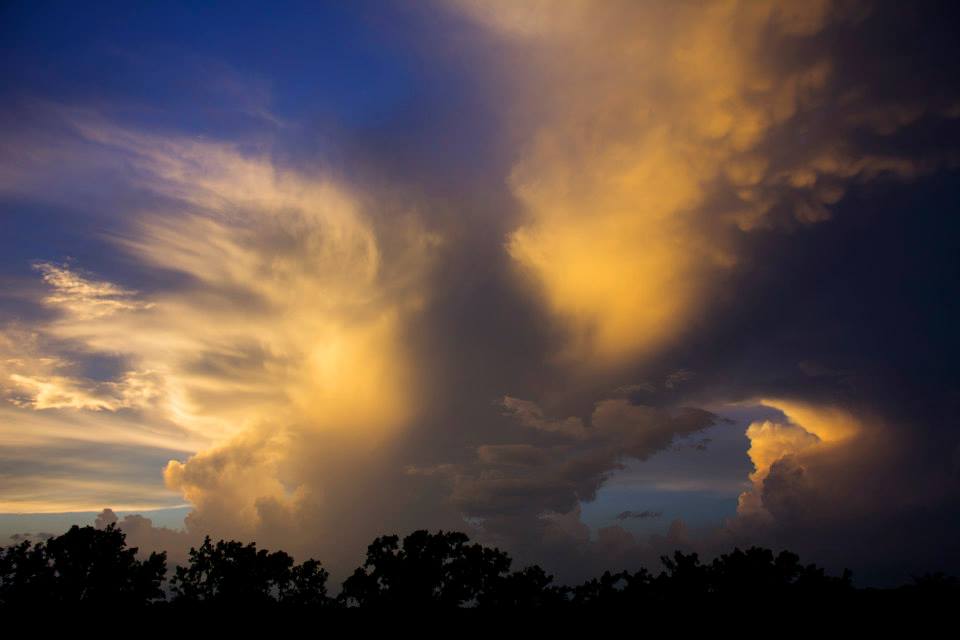
We’ve had some thunderstorms this spring, so naturally the topic of thunder and lightning came up with my two-year-old. I distinctly remember sitting at the dinner table one evening while a little thunderstorm came through. It was dark, but not so dark that you couldn’t see the rain falling outside in the backyard. After a burst of lightening and a low rumble of thunder, Walter first lobbed me a nice easy question by asking what that noise was. I think he actually knew what it was and was just doing that toddler thing where they ask the same question over and over, but I confidently told him it was thunder.
Then he asked me where thunder comes from. I don’t know if you’ve ever met a toddler, but they don’t find answers like, “I don’t really know. I think it has to do with the air up in the clouds,” to be particularly satisfying. I decided to Google this one for him because I was curious too. I also didn’t want him to develop a fear of thunder, and I thought a toddler-friendly explanation would make it less likely to be scary.
I consulted some Google results from the National Weather Service and Wikipedia.
Thunder is caused by lightning. Lightning, which is like a big discharge of static electricity up in the clouds, is very hot. The extreme heat causes causes the air around the lightening bolt to expand. The rapid expansion of air (which is basically an explosion) produces a shockwave, which we hear as a loud noise: thunder.
So, if thunder is caused by lightning, what causes lightning? I found a fascinating article on HowStuffWorks.com about it.
Lightning is static electricity, which is caused by two things rubbing together. Up in the clouds during a thunderstorm, water molecules and ice particles rub together and cause a buildup of static electricity. When the negative charge up in the clouds is attracted to positive charges on earth (or in nearby clouds) an electrical current is created. This current is super hot (hotter than the surface of the sun, apparently, which is crazy) which creates the bright flash of light and the explosion we hear as thunder.
Lightning and thunder happen together, but since the speed of light is faster than the speed of sound, we see the lightning flash before we hear the thunder. The more time between lightning and thunder, the farther away the storm is.
So, armed with this knowledge, I was able to tell my ever-inquisitive child that thunder happens when the air in the clouds gets so hot it expands and makes a big boom. I’m not sure Walter entirely grasped all the science, but he seemed satisfied that I had at least supplied him with an answer. And, at least for now, he seems more fascinated by thunder than apprehensive of it.
 The Eberblog
Leave a comment