
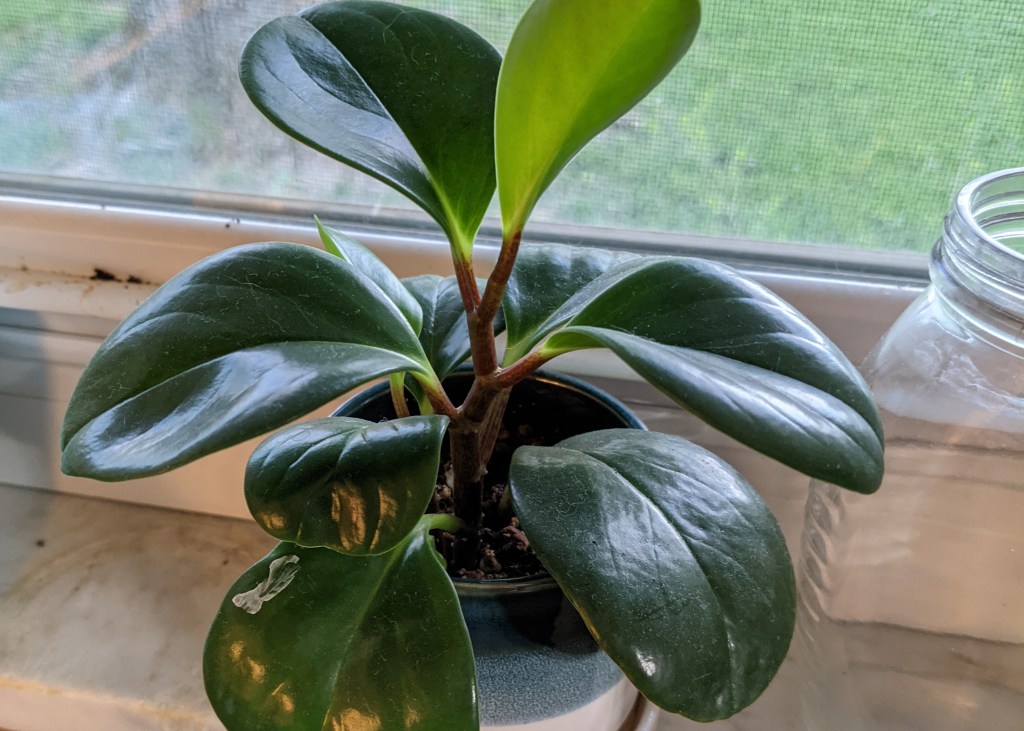
While I don’t claim to be an expert botanist, I have managed to keep a handful of houseplants and succulents alive. I’m sometimes asked to recommend an easy plant to someone who wants to get one for the first time, and I always suggest the Peperomia obtusifolia, or “baby rubber plant.”
I’ve had my Peperomia obtusifolia for many years, and I’ve shared propagations with my mom, sister, and a friend. I had never heard of this plant before I received one from a coworker one Christmas, and since she couldn’t remember the name of it I had to do some Googling and eventually asked in a Facebook group to confirm what it was. It has thick, shiny leaves that remind me a little of succulent leaves. It’s a cute plant and so easy to care for. It’s easy to propagate, too!
Sunlight and Water
The great thing about this plant is that it can bounce back pretty well from a little negligence. It’s not a true succulent, but the thick leaves hold onto water so it can dry out a bit and still be okay. Like most plants, it will be happiest and put out the most new growth if it gets a lot of sunlight.
I just stick my peperomia on a sunny windowsill, and water it thoroughly when the soil is dry or if the leaves start to look dull and droopy. It’s just that easy!
Propagating
Another thing I love about this plant is that it’s so easy to propagate. You can create a little Peperomia army for yourself, or you can share the love (like my coworker did.)
To propagate a baby rubber plant:
- Cut the top of the stem, leaving 2 or 3 leaves.
- Remove the bottom leaf, so you have a couple inches of bare stem.
- Stick the stem in a cup of water and leave it on the windowsill until roots form (this usually takes a week or two.)
- When the roots are about an inch long, take the stem out of the water and plant it in soil.
- Care for it just like the plant it came from. Soon it should start putting out new leaves.
Potting
I always like having my plants in pots with drainage holes since it lets you water the plants thoroughly without worrying about giving them too much water at once. I really like ceramic pots, but the baby rubber plant doesn’t seem too picky about pots. For soil, I just use a basic houseplant mix.
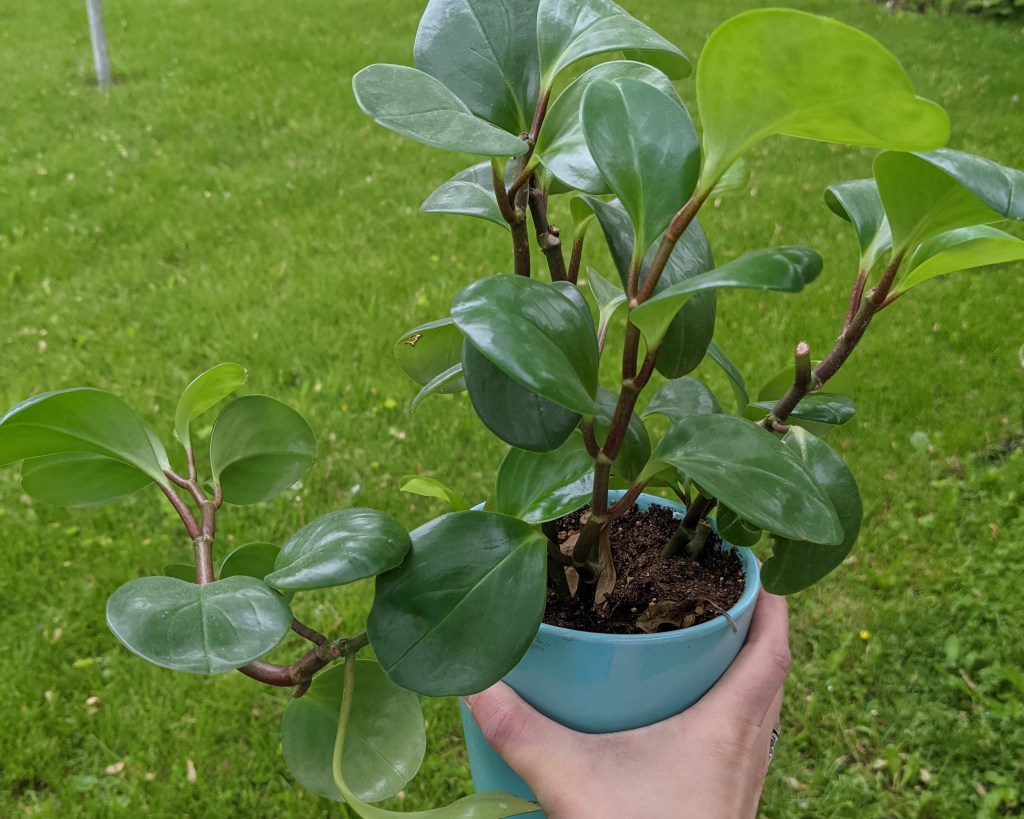
I don’t repot my baby rubber plant very often. I try to do it at least every couple years to refresh the soil. It might be time for a new pot if you see roots starting to stick out the top, if it seems like new growth has slowed, or if leaves are turning yellow or falling off even though you’re caring for it the same way you always did.
And, it’s non-toxic!
This is especially relevant if you have pets or small children. (I have both.) I research plants before bringing them into the house, and I only get plants that are non-toxic to cats. Fortunately, Paisley and Oliver don’t seem to have much interest in this one, but it’s nice to know it be harmless to them if they did give it a munch.
This page on the ASPCA website is a great source of information about plants and their toxicity to cats and dogs (and horses, for those of you who have pet horses in your homes.)
Seriously, this plant is so chill. If you like houseplants but you’ve never had one before, the baby rubber plant is a great first plant. It’s low-maintenance and very forgiving. And, it’s super cute!
 The Eberblog
Leave a comment